Optimize Your Bookings & Maximize Revenue with Dynamic Pricing
Automatically Increase your prices during your busiest days with dynamic pricing.
- Increase Direct Bookings
- Built For Watersports
- Save Hours Every Week
- Live Support
Maximize Profit Automatically
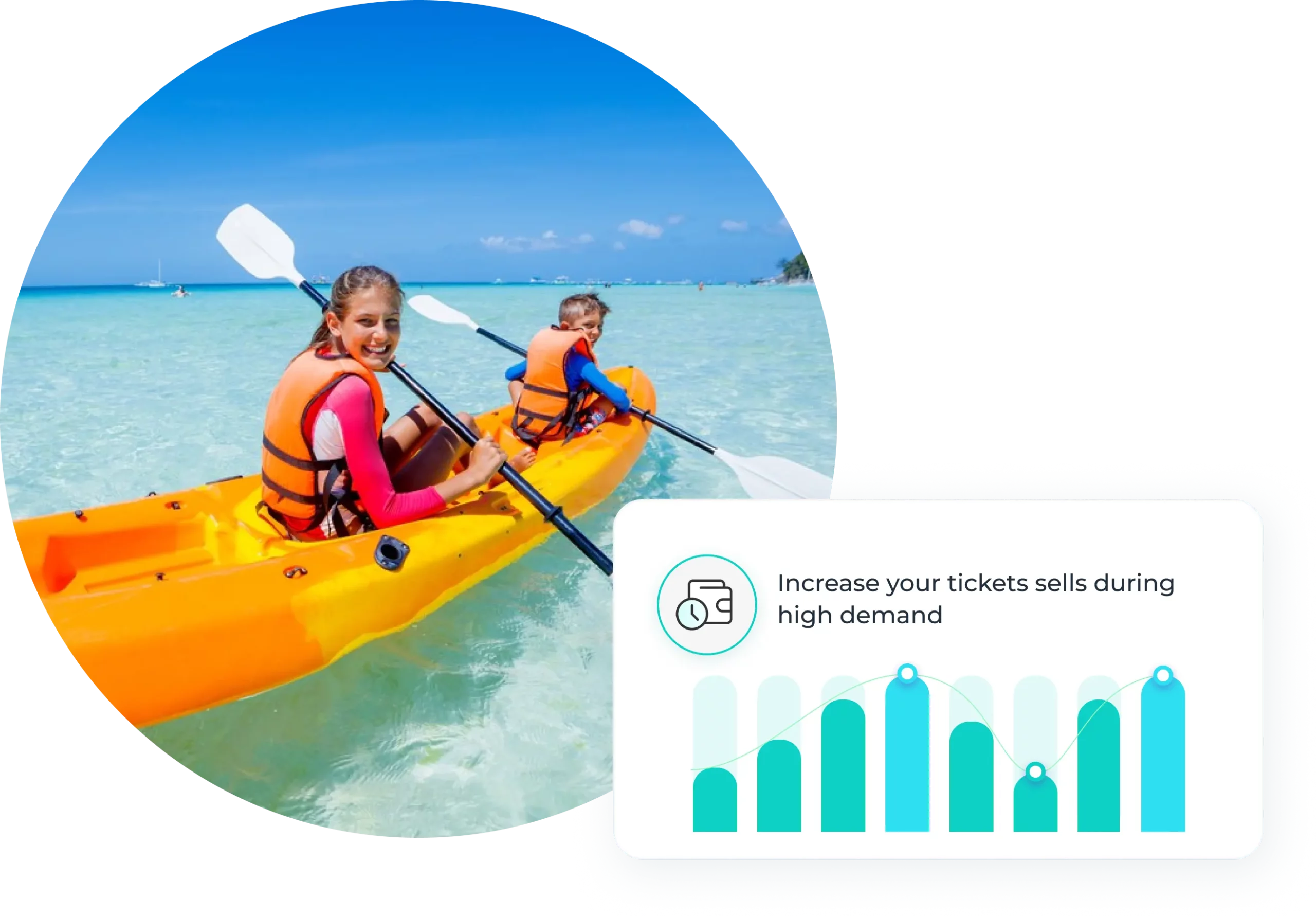
- Set pricing rules to increase price as rentals and tickets meet ticket thresholds.
- Create multiple pricing rules for each trip to receive maximum profit during high demand periods.
- Choose specific schedules and ticket types to be affected for price increases.
Capture More Revenue During Peak Season
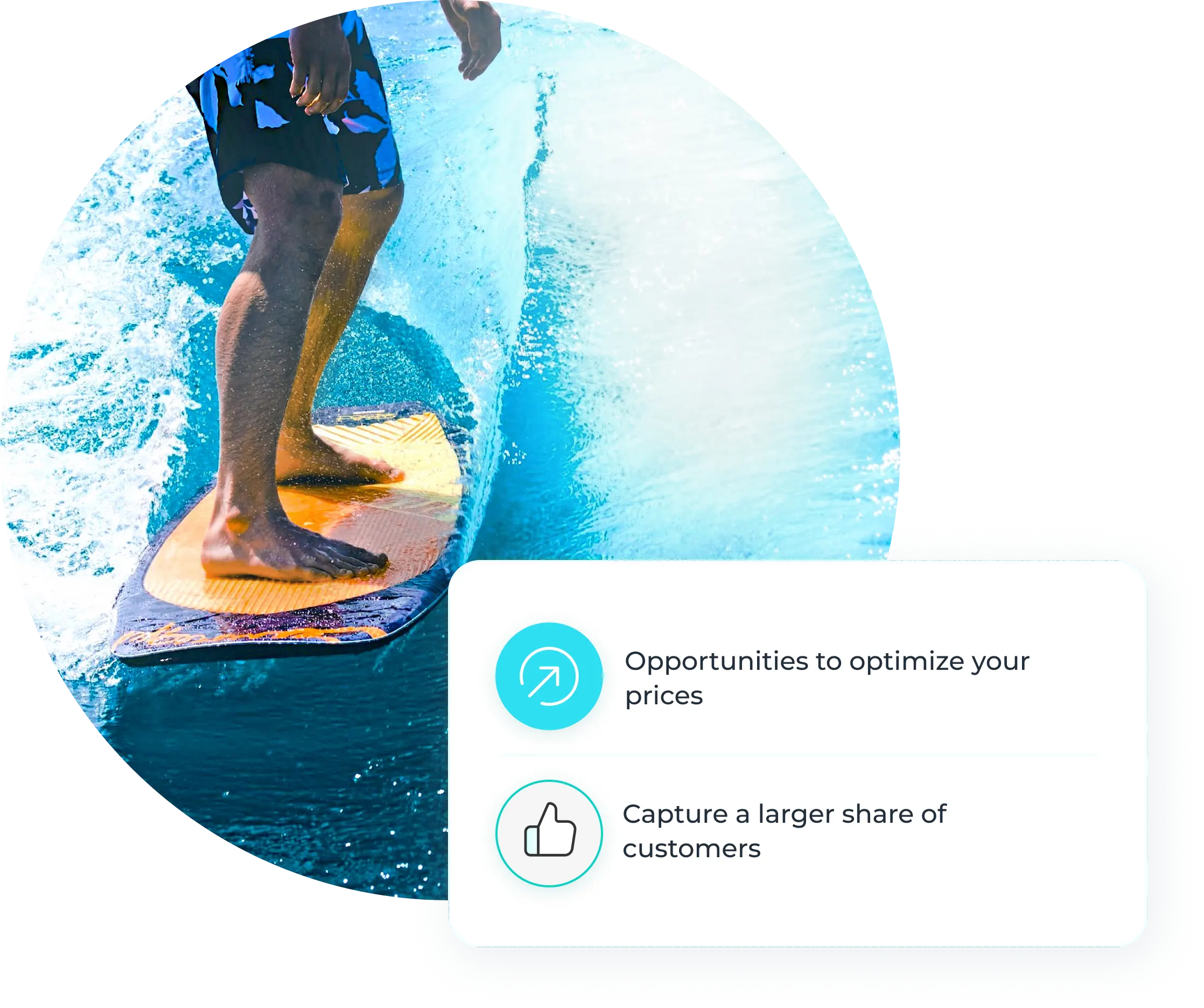
- Increase prices automatically for trips that are already selling out.
- Set up dynamic pricing rules in minutes, or work with the WaveRez team to fine-tune advanced pricing strategies.
- Return to your original pricing anytime with a single click.
Dynamic Pricing Without the Complexity
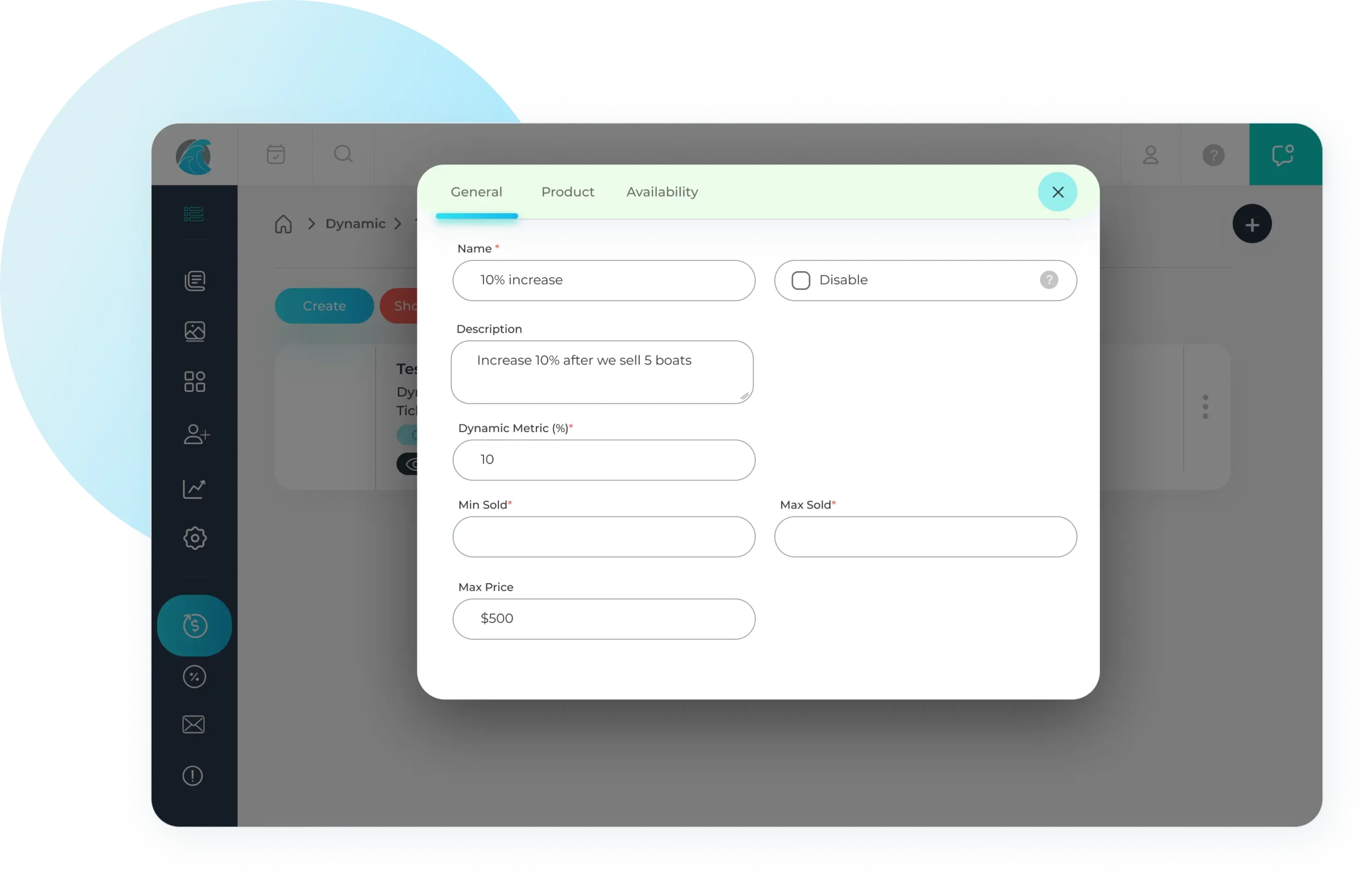
- Rules automatically apply every 24 hours when criteria are met.
- Activate pricing changes manually whenever needed.
- Use built-in price caps to keep rates within your comfort zone.
Frequently Asked questions about Dynamic Pricing
1. How does dynamic pricing impact recurring customer bookings on tours?
Dynamic pricing doesn’t affect recurring customers at all. In fact, it actually can generate more revenue from them and also provide opportunities where they can save. When first implemented, it’s common for some customers to complain about it, but it’s up to your crew to ensure they are aware of how pricing works, and what they need to do to ensure the best price possible.
2. Is it worth adding dynamic pricing to my small boat rental fleet?
Dynamic pricing can be worthwhile in some situations, but it generally delivers the best results for operators with at least 5 rental boats or passenger vessels that carry more than 10 guests. Effective dynamic pricing depends on having enough booking volume to identify real demand trends instead of reacting to isolated events.
For example, if you only have 5 boats, it’s possible to sell out on a single busy day while the rest of the week remains slow. A pricing engine could mistakenly interpret that one sellout as a sustained increase in demand. Operators with larger fleets generate more booking data, making it easier to distinguish true demand patterns from one off spikes. As a result, pricing adjustments tend to be more accurate, consistent, and aligned with actual market demand.
3. How would I implement dynamic pricing on a larger COI vessel with 100+ passengers?
If you’re new to dynamic pricing, the first step would be to identify days and schedule times where you are historically busy. Start with adding a small increase (increase base price by 10%) when the boat reaches 50% capacity, then add another tier when it exceeds 75% (increase base price by 20%). The WaveRez system allows you to set schedules for dynamic pricing so it only affects times where you would otherwise be close to selling out. I highly recommend just focusing on raising price during high demand periods, and not focus on lowering price during the slower times. In our research at WaveRez, we’ve found that when business is slow, lowering price actually can hurt revenue more than help.
4. How do I promote my pricing when dynamic pricing is active?
Most operators think that adding dynamic pricing would lead to unhappy customers, but this is usually not the case. It all depends on how you marketing it on your website and at your location. Make sure that all prices listed on your website, signs, and booking portal begin with “From” or “Starting at”. This will ensure that customers know that it’s not a definitive price. Next, train your crew to always mention that prices are subject to change, and they can lock in the best price by booking now. This call-to-action always seems to get customers interesting in booking in fear of prices increasing if they wait.
5. Can I turn off dynamic pricing on specific days or change the rate manually?
Yes, you can control the pricing rules after they have been implemented. In the WaveRez software, you can modify the dynamic rates in the calendar controls. You can also run the dynamic pricing script manually if you want the prices to change more often.
6. How much revenue can I realistically make if I use Dynamic Pricing for tours?
In our experience at WaveRez, operators that invested time into building out their dynamic pricing rules saw anywhere from a 3-5% annual increase in revenue. There are some examples of generating 10%+. The better results came from those who had multi passenger boats with a meaningful amount of inventory where the rules have more data to work with.
7. How easy is it to get set up on dynamic pricing with WaveRez?
Getting started with dynamic pricing in WaveRez is straightforward. After identifying the dates and departure times you want to optimize, you’ll create a pricing rule using a guided setup. The rule lets you select the travel dates, schedule times, activities, blackout dates, price increase amount, and the booking threshold that triggers each price adjustment.
Once your rule is active, WaveRez automatically evaluates qualifying trips every 24 hours and updates prices when the defined conditions are met. If demand changes quickly, you can also run the pricing rule manually at any time to immediately adjust rates for trips that are filling faster than expected.
8. Will my dynamic pricing changes be pushed to OTAs like Viator and TripShock?
Yes, your dynamic pricing changes will be pushed to some OTAs, but not all. For example, if you’re on WaveRez and use TripShock as an OTA, then prices will update based on your dynamic pricing rules. If you are using Viator or Get Your Guide, then dynamic pricing will not be pushed through. You would have to manually go into Viator and Get Your Guide to update the prices, which is not ideal.
9. How do I handle customers who paid much more for their ticket and they find out from other customers?
If a guest discovers they paid more than someone else on the same tour, your staff should explain that pricing is based on demand and availability at the time of booking. Guests who reserve earlier or book during slower periods often receive lower prices, while rates typically increase as availability becomes limited. This type of demand-based pricing is common throughout the travel and hospitality industry. If the guest is still dissatisfied after the explanation, consider offering a small gesture of goodwill, such as complimentary gear rental, discounted merchandise, or another low-cost perk that reinforces how much you value their business. In practice, situations like this are uncommon because most guests do not discuss what they paid with other passengers, so pricing differences rarely become an issue.
10. Can I use 3rd party dynamic pricing tools outside of WaveRez?
No, WaveRez does not currently support third party dynamic pricing tools. While that could change as AI-powered pricing solutions continue to evolve, these platforms require a two-way API integration that can both read and write pricing data. At this time, WaveRez’s API does not support pushing rate changes back into the system, so external dynamic pricing platforms cannot automatically update your prices.
11. Does WaveRez use AI for it’s Dynamic Pricing feature?
No, WaveRez does not currently use AI for dynamic pricing. Instead, pricing adjustments are driven by configurable rules that respond to booking trends and demand within your own account. While AI-powered pricing engines can provide more advanced recommendations, they rely on large amounts of historical booking data and external demand signals, making them significantly more complex to develop and maintain. As these technologies become more widely adopted, WaveRez plans to introduce AI-driven pricing capabilities in the future.
We Strive To Be The Best
See what real WaveRez customers are saying
John Stephens
Luther’s Pontoon, Waverunners, & Kayaks Rentals
Kristy Johnson
Olin Marler’s Dolphin Cruises & Fishing Charters
Optimize Your Inventory With Dynamic Pricing

No Hidden Fees

No Contracts

Built For Watersports

Live Support