Bareboat charters are one of the most misunderstood models in the boating industry.
On the surface, they look simple. Rent the boat, provide a captain, run trips. But in reality, there are very specific legal requirements that separate a legitimate bareboat operation from one that could get shut down fast.
We recently hosted a live session with Capt. Kenny Hilderbrandt, CEO of RentABoat, to break this down in detail.
👉 Watch the full webinar replay here: https://events.waverez.com/c/96638510/webinars
This post covers the key takeaways every operator should understand.
What Actually Defines a Bareboat Charter?
At its core, a bareboat charter is about control and responsibility.
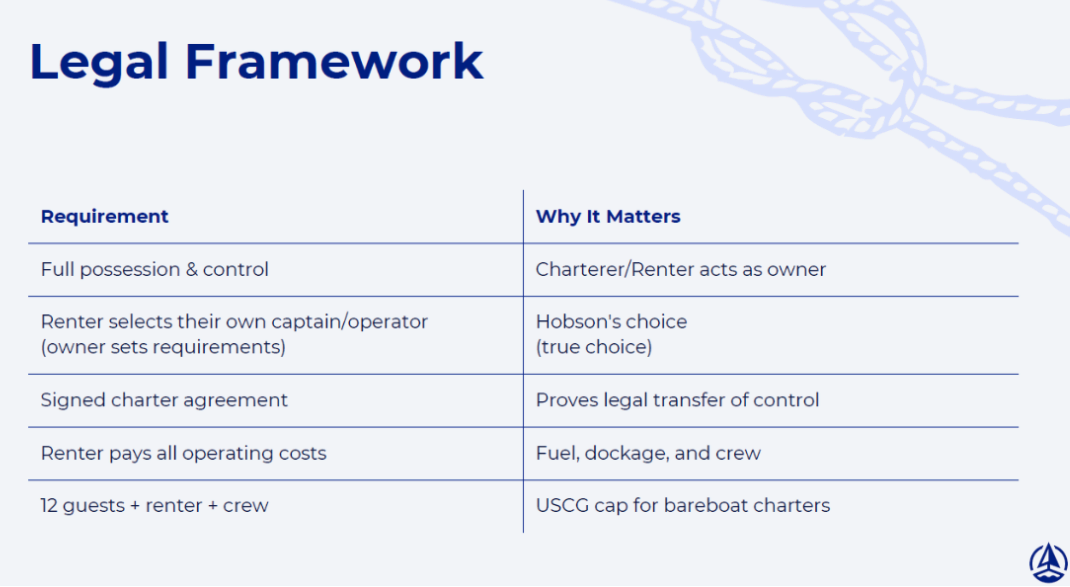
The vessel owner transfers full possession of the boat to the charterer for the duration of the trip.
Once the trip begins, the owner is completely removed from the experience. No exceptions. If the owner or their representative is onboard, it is no longer a bareboat charter.
That means:
- The charterer is responsible for the vessel
- The charterer hires the captain and crew
- The charterer assumes liability during the voyage
The Captain Rule (Where Most Operators Get It Wrong)
This is one of the biggest compliance issues in the industry.
A better approach is to require a U.S. Coast Guard licensed captain and clearly state that in your marketing and agreements. This one detail alone can determine whether your operation passes or fails a Coast Guard inspection.
In a legal bareboat charter:
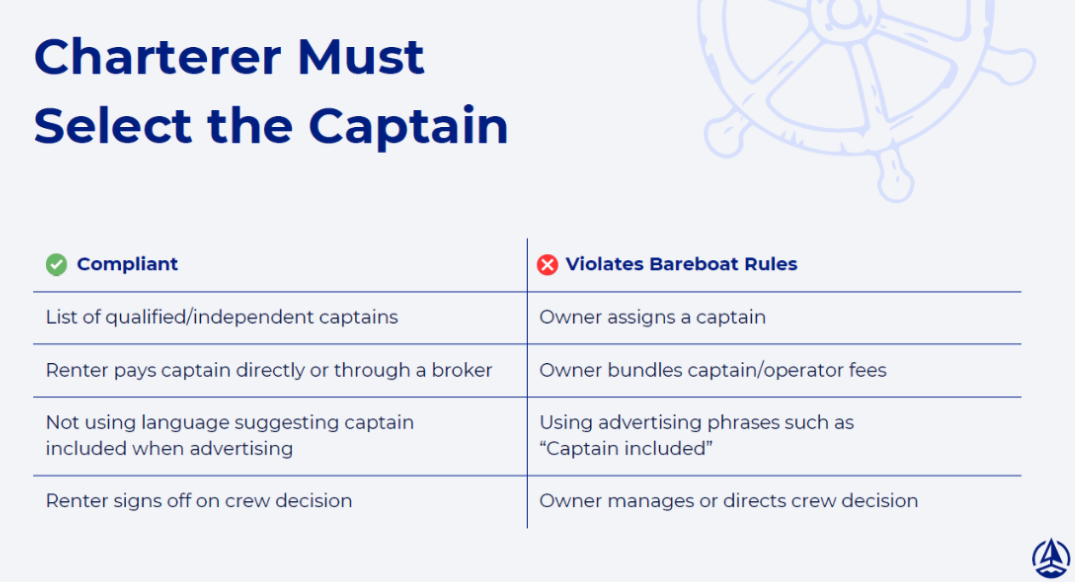
- The charterer selects and hires the captain
- The captain works for the charterer, not the owner
- The captain must be independent
- You cannot assign a captain, bundle a captain into your price, or present it as “captain included”
Your Contract Is Everything
If you are operating bareboat charters, your agreement is not just paperwork. It is your protection.
Digital agreements are acceptable, but they must be complete and clearly structured. If your contract is vague or missing key elements, you are exposed.
At a minimum, your contract should include:
- Written agreement (never verbal)
- Clear identification of both parties
- Explicit transfer of possession and liability
- Defined navigation area
- Passenger manifest
- Captain and crew listed as independent contractors
- Separate fees for captain and vessel
- Pre and post trip vessel condition notes
What You Cannot Do
There are a few hard lines that cannot be crossed. These are the types of things Coast Guard officers look for immediately.
Hard lines that cannot be crossed:
- You cannot bundle captain or fuel into the charter price
- You cannot have the owner or their representative onboard
- You cannot have owners brokering their own vessels through a charter company
- You cannot accept required captain payments directly to the owner
The 12 Plus 1 Rule
Going beyond this limit changes the classification of your operation and introduces a completely different set of regulations.
Bareboat charters are limited to:
- 12 passengers
- Plus the charterer
- That is the maximum
Payments and Why They Matter
Payment structure is another area where operators get tripped up.
If a Coast Guard officer asks a guest who they paid, and the answer points back to the owner rather than the charterer, your bareboat status can be invalidated immediately.
In a compliant bareboat setup:
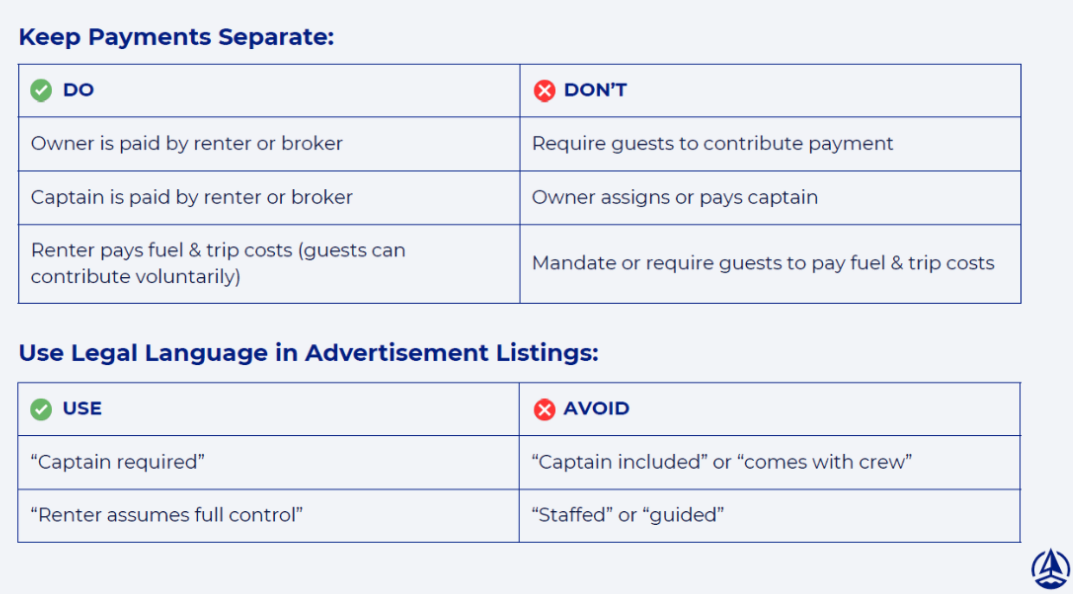
- Charterer pays the boat owner or broker
- Payments must be voluntary
- Captain and crew fees must be paid by the charterer, completely separate from the vessel rental
Preparing for a Coast Guard Boarding
This is not hypothetical. It happens regularly, especially in high-traffic markets like Miami and Fort Lauderdale. Coast Guard officers will often separate the captain, crew, and guests and question each individually. Inconsistent answers raise red flags immediately.
Everyone onboard should be able to clearly answer:
- Who hired the captain
- Who they paid
- Who is responsible for the vessel
- Keep two copies of the charter agreement onboard
- Ensure your captain and crew understand the structure
- Make sure your guests are not confused about the arrangement
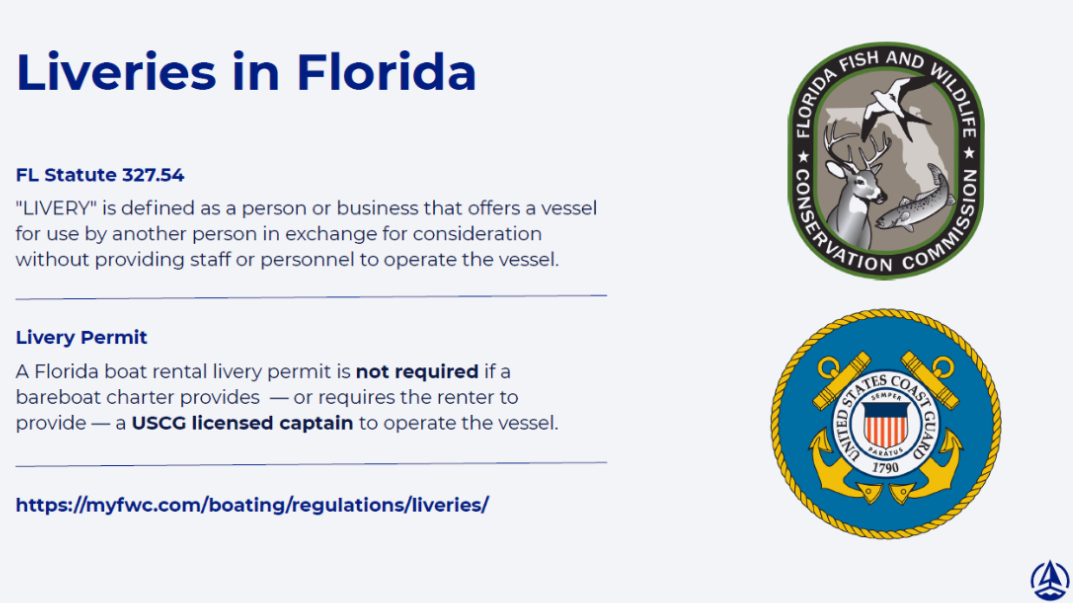
Florida-Specific Considerations
If you are operating in Florida, there are a few additional nuances:
- FWC and U.S. Coast Guard regulations are separate
- A bareboat charter with a licensed captain does not require a Florida livery permit
- Livery operations do require renter insurance
Understanding the difference is important, especially if you operate both models.
Insurance Strategy Matters More Than You Think
The Coast Guard does not regulate insurance, but that does not mean it is optional. This is one of those areas where cutting corners can cost you significantly later.
Capt. Kenny strongly recommended using a single provider for all three policies. If something goes wrong and you have three separate companies, they will point at each other. One company covering all three parties means far less friction if a claim needs to be made.
Coverage recommended for:
- The owner
- The charterer
- The captain
- Ideally all through the same provider to avoid disputes if something goes wrong
A Smarter Way to Approach Compliance
One of the best insights from the session: don’t wait for enforcement to figure this out.
Instead:
- Build a relationship with your local Coast Guard station
- Show them your agreements and process
- Get feedback before issues arise
Some stations are more familiar with bareboat charters than others, so being proactive can save you a lot of headaches
Final Thoughts
Bareboat charters can be a powerful and profitable model. But only if they are structured correctly.
Most compliance issues come down to a few key mistakes: misunderstanding the captain relationship, improper contracts, incorrect payment flow, and owners staying too involved. If you get those right, you are in a much stronger position.
Running a compliant bareboat operation also means having the right systems behind the scenes. WaveRez is built specifically for tour and rental operators, and can support your operation with digital agreements, automated guest communication, and a booking flow that keeps everything organized from reservation to departure. If you want to see how it works, schedule a demo with our team.
👉 If you want the full breakdown from Capt. Kenny, watch the webinar replay here:
https://events.waverez.com/c/96638510/webinars
⚠️ Disclaimer: This content is for educational purposes only and does not constitute legal or insurance advice. Always consult a qualified maritime attorney for guidance specific to your operation.
About the Author
Greg Fisher